
Well-Architected Framework evolves: Foundations and Workloads

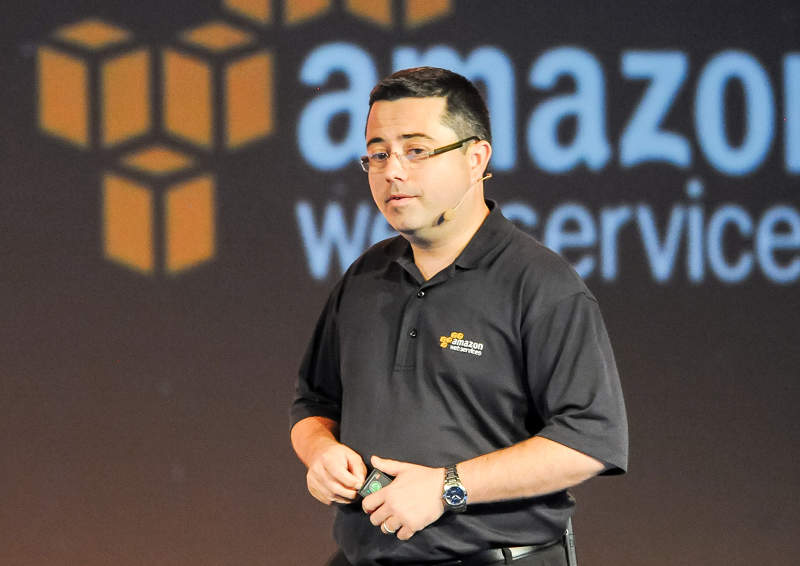
I’ve been involved with the Well-Architected Framework since my time at AWS when in late 2014 I was asked to participate in the internal discussions defining the concept. I’ve done many assessments, and I’ve used the perspectives to define and influence architectural decisions in workload deployments across the spectrum from startups to enterprises and governments.

The prescribed approach to date has been focused on the recommendations primarily of workloads: well-architected IN the cloud. BUt there’s so much more that has been missed: well-architected OF the cloud.

This has just been addressed in a recent update.

Top Down, bottom up

I have always looked at the way that the client’s AWS cloud estate is implemented from the AWS Account structure – starting with the management account, core Control Tower accounts (Audit, Security), shared services, and then various workload (sets of) accounts. I say “sets of”, as significant workloads may have separation of Development, Testing, UAT, and Production – or perhaps even more. I’ve thought of this as being the “Top-Down” control.

Meanwhile, which each of those workload accounts comes the application(s), and their posture towards the Well-Architected balance. To me that has been the “Bottom-Up” posture.

Somewhere in the middle these two meet, and their union makes happy workloads that meet balance all requirements.

Historically, Well-Architected didn’t address these two areas: it just looked at Workloads and tacked on some organisational level controls along the way. In my approach, I’ve always had a detailed approach to the organisation controls, derived best practice from real-world use protecting and scaling systems for over 16 years in AWS.

That split has now been recognised with todays update:

  • AWS Well-Architected Cloud Foundations (WA Cloud Foundations) 
  •  Well-Architected Cloud Workloads (WA Cloud Workloads)

Within enterprise organisations, it is likely different stakeholders will (or should) own responsibility for each of these.

Foundations

The Foundation section adds a set of questions that I have spent the last 10 years asking clients to consider. These are the encompassing cloud services that set the cost governance and risk boundaries across the entire cloud estate – as organised via AWS Organizations and enforced via policies and delegations.

There are times when large organisations may have multiple AWS Organizations: such as different companies in a Group, different or conflicting regulatory requirements around the world, or potentially sheer scaling limits (e.g.: hundreds of thousands of AWS Accounts).

There is also a minimum: every client organisation should have at least one Organization, normally deployed via Control Tower, with strict separation of production workloads from non-production, and with federated identity to the AWS control plane (console, APIs).

While Well-Architected Framework Workloads still has six pillars, Foundations has a different set – seven capabilities of focus:

  • FND01 – Multi-Account Environment
  • FND02 – Identity and Access Management
  • FND03 – Central Observability Managemen
  • FND04 – Resource and Inventory Management
  • FND05 – Security and Compliance
  • FND06 – Cloud Financial Management
  • FND07 – Networking and Connectivity

Support in The Well-Architected Tool

At this time, the WAFR tool in the AWS Console does not yet have native support for Foundations, but this is easily fixed using a Custom Lens. Here’s one I created just now, in Github: https://github.com/JamesBromberger/aws-well-architected-foundations-lens

You can add this into the AWS WAFR tool in the console as is, or perhaps fork the Github and improve it!

Running a Well-Architected Review

You’re welcome to run these reviews yourself, but the best benefit is to run them with someone deeply experienced in the concepts. Through Nephology (my consulting brand) I’m available to do this with you.

On your side, you’ll need to determine if you want to focus on the Foundations, a specific Workload, or both. You’ll need your expert available to work with me through a review, which we can do online remotely, or face to face. Please contact me to discuss your requirements as early a possible so we can schedule this in.

Note that repeating a Well-Architected review on an annual basis is a recommendation to gauge the ability of your organisation to progress the remediations, or identify that perhaps they are not being actioned.

Changing personal email address, changing domains

In 1997, the domain name authority (Network Information Center, or NIC) for the country of Tonga was launched. The country code for Tonga is “to“, so the NIC was naturally called TONIC.

A number of my friends and I instantly jumped on acquiring a domain under the new “.to” top-level domain (TLD). Back then, there were only a limited number of TLDs. Some of my friends and I had been pulling apart email servers (Mail Transport Agents, or MTAs), and studying the underlying network protocol by which email is exchanged, and one thing we observed was the conversation a mail server initiates when starting to send a new message:

S: 220 smtp.example.com ESMTP Postfix
C: HELO relay.example.com
S: 250 smtp.example.com, I am glad to meet you
C: MAIL FROM:bob@example.com
S: 250 Ok
C: RCPT TO:alice@example.com
S: 250 Ok
C: RCPT TO:theboss@example.com
S: 250 Ok
C: DATA
S: 354 End data with .

It was from these that we landed on the domain “rcpt.to”. And for the last nearly 30 years, I took the email address james_AT_rcpt.to. I had set my own subdomain of this, with my personal site where I would experiment with various things at “james.rcpt.to”.

Over the years, eyebrows were raised quizzically when local organisations questioned if I was really in Australia, or really in the UK, given the different email domain. And indeed, my Linux host that processed my email was indeed in those countries, and never actually in Tonga.

People then ask me… do you run your own mail server? Yes, I do. I experiment with the full range of online services. I often implement security features and approaches that are several years ahead of what commercial providers are servicing their clients with. For example, have a look at the MTA STS posts, where you can specify security requirement for Mail Transfer Agents (MTAs, as explained above). I experiment with mass mail virtual hosting, virtual domains, IMAP security settings (yes, TLS is used, just as it is in HTTPS).

Recently i was diagnosing an issue with SMTP, whereby emails to a Hotmail address were not going through. The SMTP logs revealed a response from the Hotmail servers would not accept my messages due to settings at a whole-of-domain level that with rcpt.to, were not in my direct control.

I contemplated this for a while, and then decided that this should be in my control in some way… so the time has come to move on from a shared domain for my personal experimentations, to one that I have complete control over.

I obtained the domain jamesbromberger.com many years ago, initially looking to have it as my consulting brand. However, the much better name Nephology came along (the study of clouds), so jamesbrombegrer.com was somewhat unused… until now.

It turns out there’s quite a bit involved when not just changing email address (how many places is it used?), but also redeploying your digital services to a new domain — starting with this blog.

After a few days of frenetic activity, its now mostly done. The old (personal) email address still works, and will do for the foreseeable future, but eventually I will decommission the SMTP reception for it. The old website at www.james.rcpt.to has a message to signpost people to the new domain. The old domain is still accepting SMTP. This blog is now at blog.jamesbromberger.com. My QR code generation service is at qr.jamesbromberger.com.

I think in the last 48 hours I have updated over 100 online services that have my email address: Government agencies, banking, insurance and other financial services. Loyalty programs. Airlines. Clubs and Associations. Vendors.

What I have seen from changing email is that some services permit this, and others have it strictly controlled and not user serviceable. Most that do permit users to change email addresses, verify the new email destination by sending TOTP codes or magic links. Some also re-verify the old address you are leaving, which luckily for me is still working. A few required a mobile phone MFA when doing this activity.

So after almost 30 years of james.rcpt.to and james_AT_rcpt.to, it’s time for a change.

You can email me at james_AT_jamesbromberger.com, or for consulting discussions, james_AT_nephology.net.au.

Network Error Logging (NEL) Tools

Historically in web development, once a site was published, and users were happy accessing content, the only visibility we would see were access logs, recording each item being fetches from the servers we control.

Over time, web developers added JavaScript tracking codes, which as with Google Analytics, which would record data to a dedicated endpoints that would then produce analytics reports.

And that’s where things stopped for a long time.

The user experience, or any issues they get, were never seen. If a JavaScript exception happened out on the Internet with a user, the developers would almost never hear about it unless that person submitted a bug report or kicked up a fuss on social media — enough to get someone’s attention. Occasionally sites would have a security.txt document that would list a security contact, to avoid the issue of tracking down someone within an organisation how actually knows how the web site works and who is responsible.

However, over the last 10+ years the state of error reporting in the browser has matured, but very few sites have publicly implemented it at this time. This is NEL: Network Error Logging.

I say publicly, as the error reporting is also useful to implement in development and test environments, for developers to get their hands on reports.

Support for collecting and submitting NEL has been improving, as shown in https://caniuse.com/mdn-http_headers_nel. Still we don’t yet see Firefox or Safari implementing this yet as at 2026…

I have written and released (Creative Commons) a set of tools on GitHub that help you implement and test NEL.

What will NEL tell me?

  • DNS Phase (dns): Errors that occur during domain name resolution.
    • dns.unreachable: The user’s DNS server is unreachable.
    • dns.name_not_resolved: The DNS server responded but could not resolve an IP address.
    • dns.failed: DNS lookup failed for other reasons (e.g., SERVFAIL).
    • dns.address_changed: DNS address changed unexpectedly.
  • Connection Phase (connection): Errors during TCP/TLS or socket establishment.
    • Examples include TCP connection timeouts (tcp.timed_out), refused connections (tcp.refused), or TLS/certificate validation errors (tls.cert.authority_invalid).
  • Application Phase (application): Errors occurring during the transmission or reception of HTTP request and response data (including HTTP 4xx and 5xx status codes or protocol errors).
  • Unknown Phase (unknown): Unclassified or general network drop-offs.

The NEL Endpoint

One of the first things you need is an endpoint to receive your reports. You can have as many of these as you like, such as for production environments versus non-production.

The NEL endpoint I have templated is standard HTTPS service listening to the network for a submission, with a custom hostname and a matching, valid TLS certificate.

My implementation to stand up in an AWS account from the CloudFormation template put reports that are submitted into a DynamoDB table. The operational cost of this should only be a few cents per month: its a Serverless implmentation.

Simulating NEL Reports to the Endpoint

The second thing you may want is to send some test submissions into your NEL server, as in the real world, these come in when they are ready. You can point this script at your own endpoint, and confirm that reports are being accepted and populated into your table.

If you want to force YOUR OWN Chrome browser to send reports in more rapidly, then run the Chrome executable with the flag –short-reporting-delay, as shown https://developer.chrome.com/docs/capabilities/web-apis/reporting-api.

Checking your Server HTTP Headers for NEL

Actually, you’ll need at least two headers: the NEL header, and then either the older Report-To, or the newer Reporting-Endpoints header. So the third item I am releasing is something that connects to your web site, and inspects the configuration of these headers.

Tuning the number of reports

There’s two tuning variables you can set in the NEL header: success_fraction, and failure_fraction. Each of these are a float number between 0 and 1, and they default to zero. If you want to see a sample of the failures that your clients are seeing, then increase that to a non-zero value: in your non-production environments, you could use 1. In the real world production, you probably only want to get 1% of error reports, depending on the volume of traffic you receive from the web. You can tune accordingly.

Get these on GitHub

You’ll find the three items in GitHub: https://github.com/JamesBromberger/network-error-logging-tools

Why use these?

In production – wouldn’t you like to get reports from the real world users, instead of being in the dark about any problems your clients are experiencing? This reminds me of a quote from Ian Fleming’s James Bond: Golden Eye:

Bond: Are these pictures live?
M: Yes, unlike the Americans, we prefer not to get our bad news from CNN.

In Non-production: this can help diagnose issues you are seeing with your deployments, and (as above) perhaps to a dedicated NEL endpoint for non-production sites. Adjust the Reporting-Endpoints URLs accordingly.

Keep calm and keep patching

OMG, I’m seeing PHP in the mainstream media news.

Today I checked in on this platform, as PHP powers WordPress, which is this blog platform. I self host, on my own VM (EC2 Instance), sitting behind Amazon CloudFront.

CloudFront is natively providing some protection, as only specific URLs I expose have support for HTTP POST actions. Most URLs only accept HTTP GET.

But there’s another power move: I’m running Debian; and the Debian team had patched PHP versions out earlier today. But on top of that, I have automated package installation active.

You can too, with:

dpkg-reconfigure -plow unattended-upgrades

So when I checked in my system today, it was already patched.

Meanwhile, we see legacy organisations panicing, taking systems offline, or worse – doing nothing and remaining vulnerable.

It reminds me of the recent article where an individual in Australia used an AI tool to try and book a gym session, and the AI tool found the API was unprotected, and proceeded to cancel someone else’s booking to take their slot. The issue is not the AI tool; is the unprotected vulnerable API.

Do better, people. Patch, secure, authenticate, log, provide minimal exposure. Use AI tooling to help you. Get experts in. Experience counts.

AWS Cloud Migration Considerations

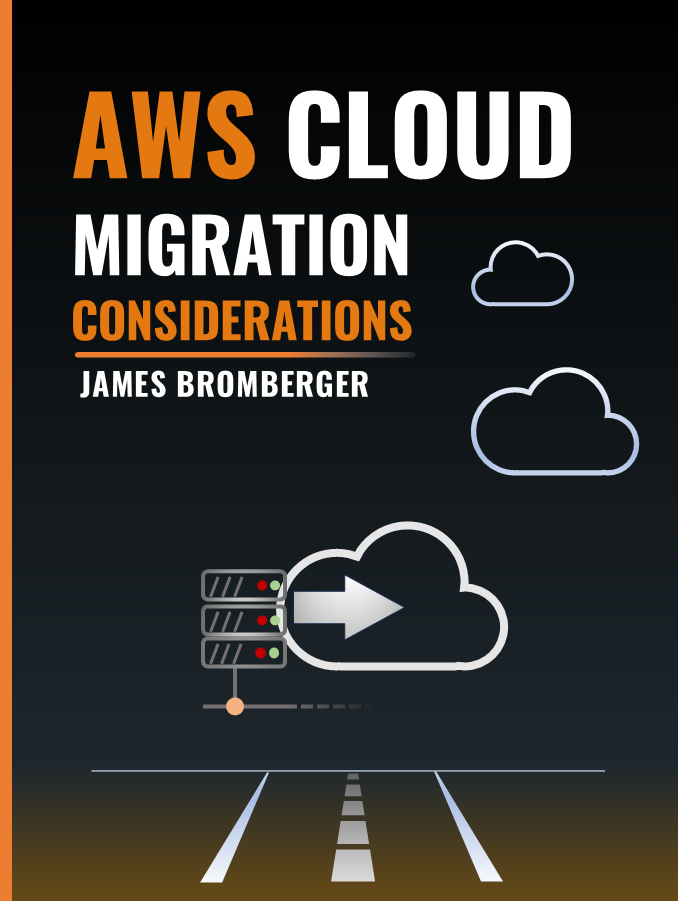
I am very pleased to share that my first book, AWS Cloud Migration Considerations, is now available to purchase in paperback (ISBN 13: 978-1-7649507-0-1).

This work started as a collection of blog posts in the early 2020s, but I kept refining, rewriting, expanding and changing it to the point that it became too much to be a series of blog posts. With a few pushes from friends in the industry, I started to think about self-publishing.

What came out of this are the perspectives that I have gained in AWS Cloud Migration space.

Why listen to me?

For those new here, why would you care about what I say? Lets condense it to a list:

  • I am the world’s longest AWS-certificate person, with an AWS Solutions Architect – Associate cert from January 2013, to today.
  • I spent almost three years as the (only) security solution architect at AWS for the Australia and New Zealand market
  • During my time at AWS, I served on the Global security & compliance board, helping select which compliance programs AWS would apply for in my part of the world, in particular in Australia
  • I was around the 10th AWS employee in Australia, and the first in Western Australia, opening the office in Perth in April 2012
  • I ran a global AWS Consulting practice within the Adecco Group for 12 years, peaking in the top 100 of all AWS partners worldwide (by count of recognised AWS certifications in my teams)
  • I have a background in Linux and Open Source , Networking, and implementing and operating internet facing systems at scale: ecommerce, advertising, financial services, lands industry, and higher education; systems of record and critical national infrastructure
  • I have held national governemnt seurity clearance(s)
  • I have used AWS since 2008, which is a fair amount of the time its been around for now
  • I have been inside (one of the halls of) US-East-1
  • I have used GovCloud (USA), and AWS China, as well as many of the AWS Commercial Partition Regions, and did a speaking tour of Germany around the European Sovereign Cloud region

So why buy my book?

Well, I am experimenting in this – perhaps it may be easier to share my thoughts in long-form in print, and have it count for something. Different people consume ideas and approaches via different medium, and a traditional physical print works for some.

They say everyone has a book in them, trying to get out. Well, this is my first one. There’s something permanent about print as well. A nice touch I can do a soppy dedication to my wife and children too.

What do I get from each book sale?

After tax, it’s about the price of a cup of coffee.

How many copies do I think I will sell?

Huh, I really don’t know. Stay tuned and we’ll see.

Will I do a Kindle/ePub version?

Perhaps, but not right now; I’d need a good reason to. I have the ISBNs (every variant/medium needs its own unique ISBN), but perhaps need the time, funding and motivation.

Do you have another book to write?

I keep thinking of doing a picture book of my small dog, Gracie (a 7 year old Moodle, a white fluffball with brown ears). She has a habit of finding socks and then redistributing them through the house, and occasionally outside. I think it would be called “Gracie The Sock Thief“, and be a set of photos when I have caught her “red handed”, or more “sock-in-mouth” on her dastardly deed.

Do I have more cloud advice to share?

Oh yes. But I don’t know if it’s going to be a book.

What about a book tour/book launch?

Many people have said you don’t write a book to make money”. Well, there’s no money (currently) for a tour, unless that tour is from my house to the middle of Perth ($2.80 on public transport, or $12 for a day of parking)! If you have suggestions or invites, LMK!

Can I come and talk at your AWS User Group?

Travel permitting, I would love to. I started the AWS User Group in Perth, have presetened there many times, as well as many other User Groups (see https://cv.jamesbromberger.com for a longer list).

Can you come and talk to my organisation about Cloud?

Sure, please check out my consulting brand https://nephology.net.au/. I can travel pretty much anywhere within reason (and per diem).